
AI Lunch and Learn: Studying and Designing Human-AI Systems with and for People with Disabilities and Disability Communities
Please join the Center for Community-Engaged Artificial Intelligence (CEAI) and Connolly Alexander Institute for Data Science (CAIDS) for the next "Lunch and Learn" seminar exploring the impacts of data and AI on society.
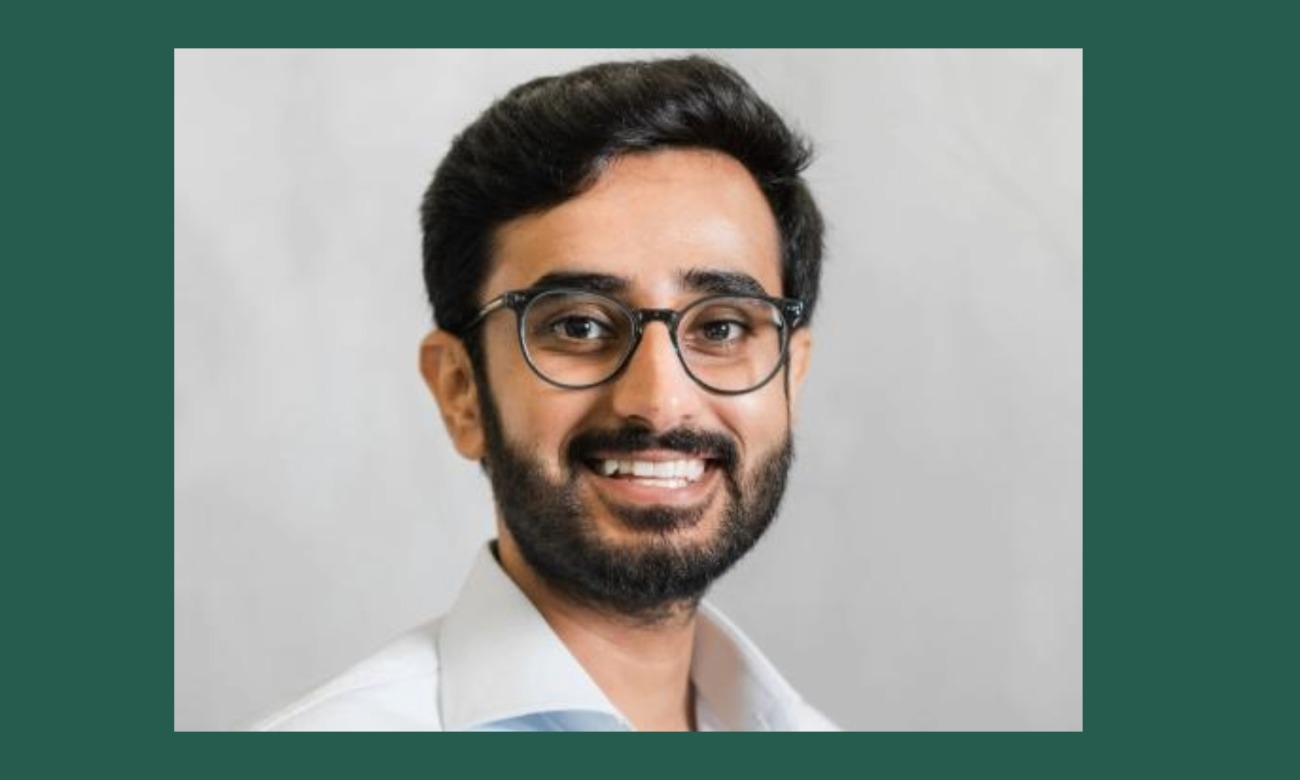
Speaker: Saad Hassan, Assistant Professor of Computer Science, School of Science and Engineering, Tulane University.
Title: Studying and Designing Human-AI Systems with and for People with Disabilities and Disability Communities
Abstract: Advancements in AI have created new opportunities to design innovative technologies by building practical human-AI systems that map general-purpose models to specific use cases tailored to users’ diverse needs. I employ human-computer interaction (HCI) methods to understand these needs and study how people interact with such systems to inform this mapping.
In this talk, I will present an overview of my research on building and studying human-AI systems that benefit people with disabilities (e.g., Deaf or hard-of-hearing people) and those connected to disability communities (e.g., hearing parents of Deaf children learning sign language). I will share examples of my work on improving communication for and with people with disabilities and on enhancing the accessibility of digital information. I will then discuss my recent work on advancing the reporting, tracking, and dissemination of accessibility-barrier data and outline my future plans.
Bio: Saad Hassan is an Assistant Professor of Computer Science in the School of Science and Engineering at Tulane University. He directs the Accessibility (A11y) Lab and is affiliated with the Tulane Center for Community-Engaged AI. His research spans accessible computing, HCI, and computational social science, focusing on AI-driven technologies that support communication, learning, civic engagement, and creative expression for people with disabilities.
Professor Saad has published more than 25 research articles in premier ACM HCI and accessibility venues, including the Conference on Human Factors in Computing Systems (CHI), the Conference on Computers and Accessibility (ASSETS), Transactions on Accessible Computing (TACCESS), and the Conference on Mobile Human-Computer Interaction (MobileHCI). His work has also appeared in leading AI venues such as the IEEE/CVF Conference on Computer Vision and Pattern Recognition (CVPR), the Conference on Neural Information Processing Systems (NeurIPS), and the Conference on Empirical Methods in Natural Language Processing (EMNLP). He has received four Honorable Mention and Best Paper nominations at CHI and ASSETS and currently serves on the program committees for both venues.
He is a recipient of the Duolingo Dissertation Award and a few early-career and planning grants, including the Louisiana Board of Regents Research Competitiveness Subprogram (RCS) award, the Tulane University Provost’s Award, and a Lavin-Bernick Faculty Grant. Professor Saad earned his PhD in Computing and Information Sciences from the Rochester Institute of Technology, where he was advised by Matt Huenerfauth. During his PhD, he also worked as a research scientist intern at Google Research and Meta Reality Labs.
Event Accessibility: The Lavin-Bernick Center is an accessible building with push-button access. This seminar takes place on the second floor of the Lavin-Bernick Center (LBC) in Room 210-The McKeever Room. Enter the LBC at the East Entrance on McAlister Drive. An elevator, located directly to the right, will take you to the second floor. Tulane University is committed to providing universal access to all our events. Please contact Meg Keenan at mkeenan@tulane.edu or 504-862-8381 for other accessibility accommodations. Please note that advance notice is necessary to arrange some accessibility needs.