
Ecologies of Abstraction: Implicated Aesthetics, Curatorial Politics, and Environmental Cinema in Postwar Germany
Event Date
-
Gibson 126A
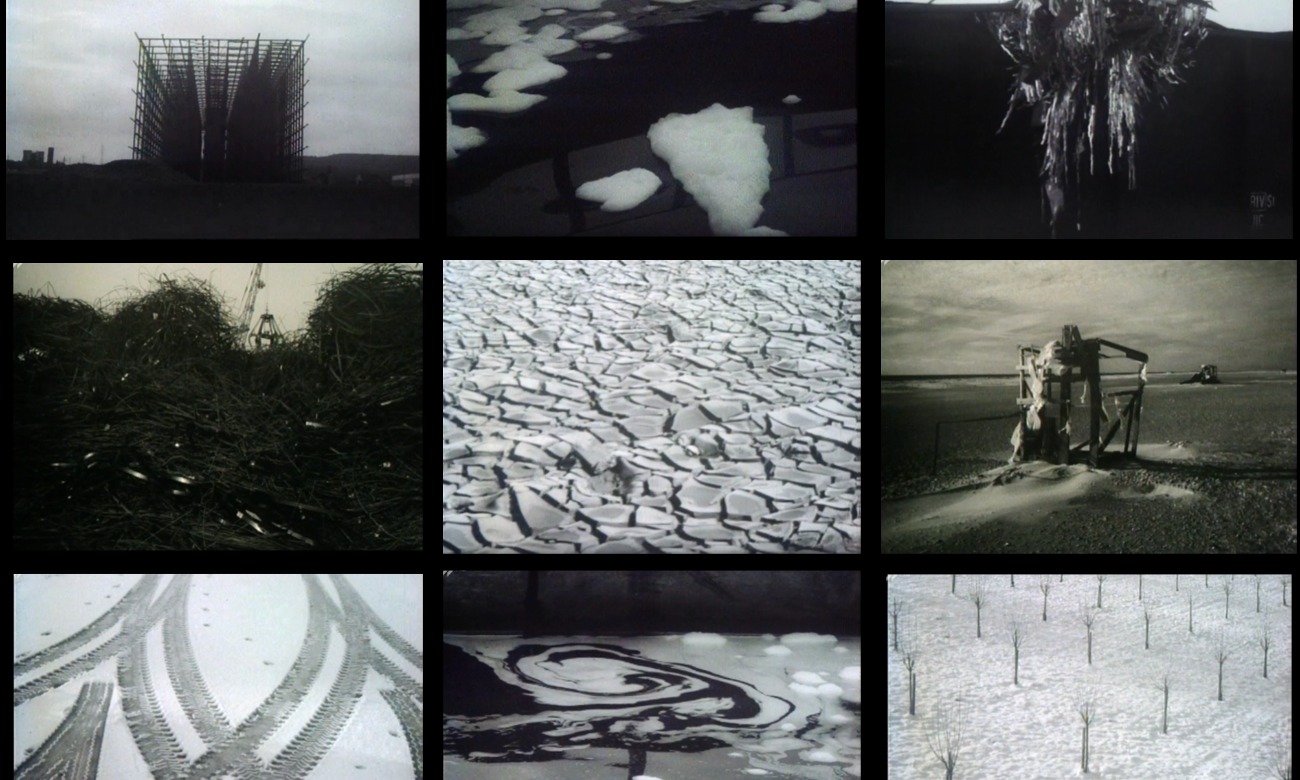
While moral reckonings benefit from clearcut categories of “victim” and “perpetrator,” historical case studies reveal this distinction to be far from neat. Our own relation to the climate crisis is a good example of such moral complexity, but it is also reflected in attempts by citizens of the Third Reich to perform social reparations after the Second World War. This talk considers the case of Ottomar Domnick (1907–1989), whose cultural engagements in the postwar bridge these two contexts of moral implication, with his curation of painters victimized by the Third Reich giving way to cinematic explorations of environmental destruction. Uniting these projects is Domnick’s commitment to an aesthetics of abstraction, one that does not seek to erase traces of the human being, but rather aims to discover milieus of solidarity from which new political collectives, whose members are as implicated as they are interdependent, become possible.
Bio:
William Stewart is a scholar of cultural history, media studies, and theories of art and architecture in 20th- and 21st-century Europe. His research focuses particularly on the impact that mathematical discourses around quantification, axiomatics, and abstraction have had on cultural production and definitions of the human being, especially in the postwar Germanies. Stewart has published and presented research on the polymath and philosopher of technology Max Bense, the artist Hanne Darboven, the architect Frei Otto, the design pedagogies at the Hochschule für Gestaltung in Ulm, and most recently, the visual aesthetics of “mathematical dust.” His writing has appeared in journals such as October, Grey Room, Zeitschrift für Medien- und Kulturforschung (ZMK), and the Los Angeles Review of Books. Stewart received a PhD jointly from the Department of German and the Interdisciplinary Doctoral Program in the Humanities at Princeton University. He is currently a lecturer in the Department of Germanic Languages and Literatures at Harvard University.